ServicesCommercial Roof Repair
Commercial Roof Repair in Noble, OK
A leak over a storefront, office or shop costs you more than ceiling tiles. We trace water to its real source, show you what failed and repair it properly on TPO, EPDM, modified bitumen and metal roofs, with a clear answer on whether repair is the right call.
When repair is the right answer for a commercial roof
Most commercial leaks start at a small number of weak points: seams, flashing around rooftop units, pipe boots, drains and the edge metal. If the membrane itself still has life in it, a targeted repair at those points can keep the building dry for years and costs far less than a new system.
We will tell you plainly when that is not the case. If the insulation underneath is saturated across a large area or the membrane has gone brittle everywhere, patching becomes a recurring bill. In that case we will explain why and walk you through Commercial Roof Replacement as an option, not a sales pitch.
Our goal on every visit is the same: find the cause, fix it cleanly, and leave you with photos and a written explanation you can share with an owner, tenant or property manager.
What our commercial repair work covers
- Leak tracing
- Water on a flat roof often travels well away from where it drips inside. We walk the roof, check seams and penetrations above the interior stain, and follow the path back to the actual entry point.
- Seam and membrane repair
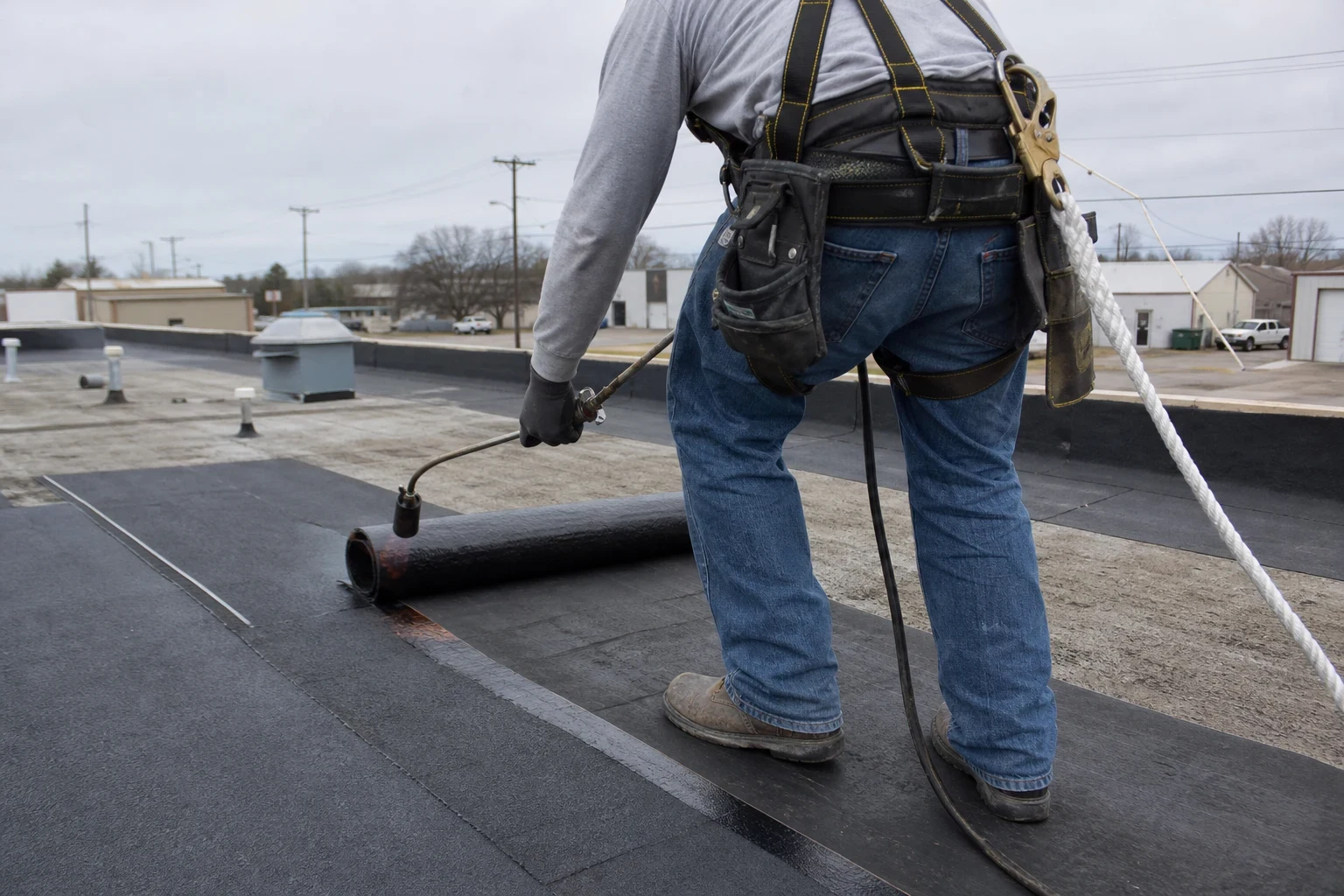
- On TPO we heat-weld new material to clean, prepared membrane. On EPDM we use primer and seam tape or cured patches suited to rubber. Modified bitumen gets compatible torch-down or cold-applied material, never a mismatched product that will peel.
- Flashing at curbs and penetrations
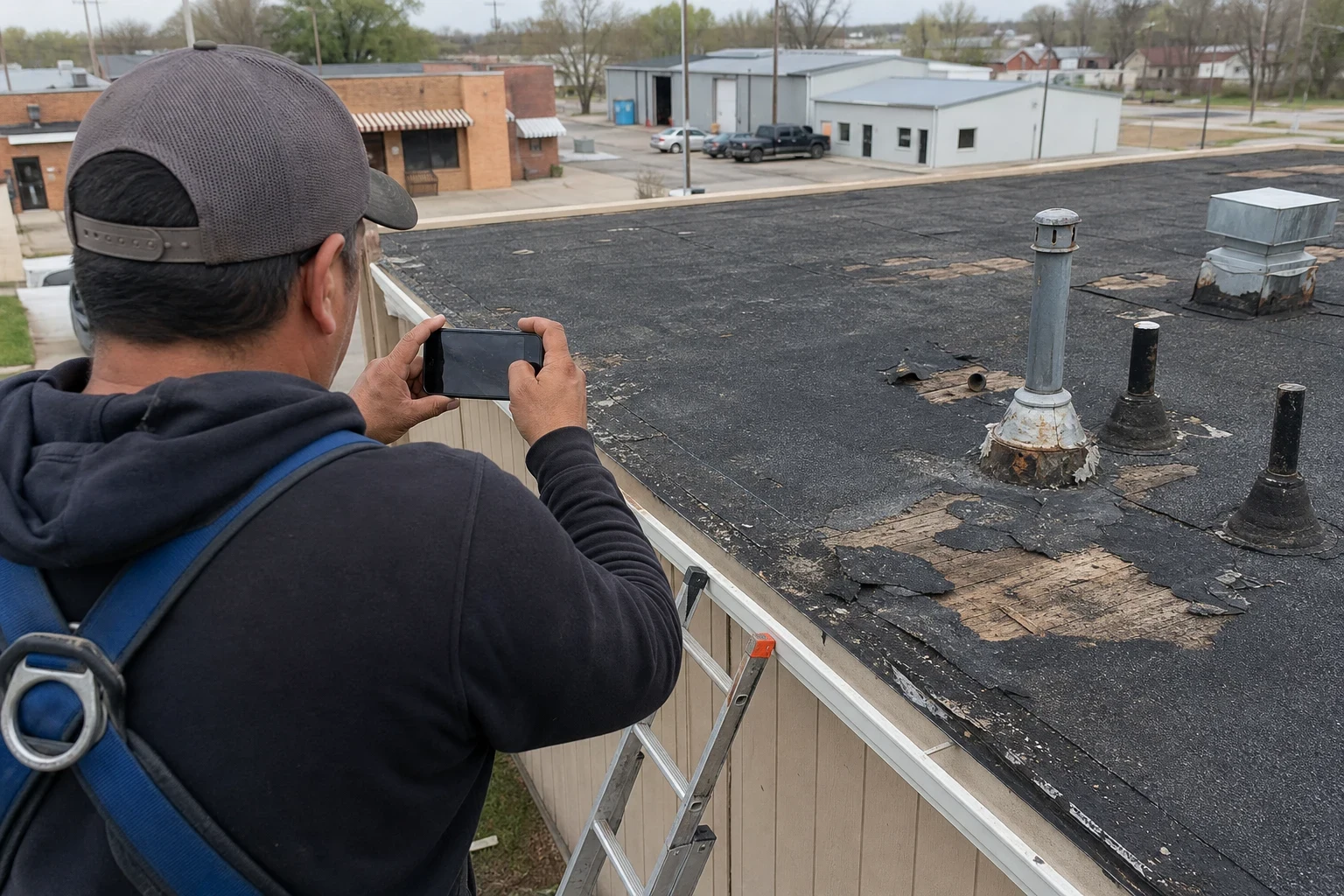
- Rooftop HVAC curbs, vent stacks, skylights and conduit are where most leaks begin. We remove failed flashing and sealant, then rebuild the detail so it sheds water rather than relying on caulk alone.
- Drains, scuppers and standing water
- When a drain is blocked or a section of deck has sagged, rainwater pools and stays put, and that slow soak shortens a membrane's life. We clear the debris, reseat drain clamping rings and can build crickets or tapered insulation to move water off the trouble spots.
- Metal roof fasteners and seams
- Exposed-fastener metal roofs leak as washers dry out and screws back off with heat cycling. We replace worn fasteners, reseal laps and address rust before it opens a hole.
Signs your commercial roof needs attention
Stained ceiling tiles
Brown rings or sagging tiles mean water is already reaching the interior. The sooner it is traced, the less insulation and decking get soaked.
Ponding that won't drain
Standing water that lingers two or three dry days after a storm usually points to a clogged drain or a low spot in the deck. The added weight and steady wetting wear the membrane out before its time.
Blisters, bubbles or wrinkles
Raised spots in a membrane or bitumen roof often hold trapped moisture. Left alone they can split open in summer heat.
Open seams or loose edge metal
Seams that have pulled apart or edge metal that lifts in wind are easy entry points. Strong spring winds can turn a small loose section into a torn one.
Cracked sealant around units
Sealant around HVAC curbs and pipes dries and shrinks over time. Visible cracks or gaps usually mean the flashing behind them needs work too.
Rising energy bills
Wet insulation loses much of its ability to hold heat or cool air. A jump in utility costs can be a quiet sign of a hidden leak.
How a repair visit runs
- 1
A conversation by phone
We ask where inside the building you are seeing water, which roofing system is up there if anyone knows, and how we get onto the roof. With that, we can load the right materials before we arrive.
- 2
Roof walk and findings
We inspect the roof and the interior leak area, take photos of what we find, and explain the cause in plain terms. You get a written estimate that separates each repair item.
- 3
The repair
We schedule around your business where we can, keep debris contained and protect walkways and rooftop equipment. Materials are matched to your existing system so the repair bonds and lasts.
- 4
Cleanup and review
We remove old flashing, fasteners and scrap from the roof and the ground. You receive after photos showing the finished work.
What affects the cost of a commercial repair
We do not quote a number before we see the roof, because the same drip can come from a five-minute fix or a failed detail that needs rebuilding. These are the things that move the price, and your written estimate will show each one.
- Roof system type
- TPO, EPDM, modified bitumen, built-up and metal each use different materials and methods. Some older built-up roofs need more prep before anything will adhere.
- What is underneath
- If insulation or decking below the leak is wet, it has to be cut out and replaced. We confirm this before work starts so it is not a surprise.
- Size and number of problem areas
- One failed pipe boot is a small job. Several failed seams and curbs across a large roof take more material and labor.
- Access and rooftop equipment
- Roof height, ladder or lift access, and how much HVAC or other equipment sits on the roof all affect labor time.
Commercial roof repair questions
Something not covered here? (405) 689-8277
Is a repair enough, or are we looking at a new roof?
It depends on how much of the membrane is still sound and how much of the insulation has taken on water. When the trouble is limited to seams, flashing and a few isolated spots, a repair is usually the sensible choice. If moisture runs across large areas or the membrane is failing everywhere, we will show you the evidence and explain replacement as an option.
Do you need to shut down our business while you work?
Usually not. Most repairs happen entirely on the roof, and we coordinate with you on timing, noise and access. If any work requires coming inside, such as checking above ceiling tiles, we plan that around your hours.
What kind of commercial roofs do you work on?
We repair TPO, EPDM, modified bitumen, built-up and metal roofs on low-slope and pitched commercial buildings. Repair materials are matched to your existing system so they bond correctly.
Can you help after a hail or wind storm?
Yes. We photograph each damaged area and put our findings in writing, so your insurance company has a clear record to review. We explain what we saw on the roof, but the adjuster decides what is covered. Our Storm Damage Repair page covers that process in more detail.
How do we keep leaks from coming back?
Keep drains and scuppers clear, limit foot traffic to service paths, and have the roof looked at after major storms. A periodic check through our Roof Inspections service catches cracked sealant and open seams before water gets in.
Get a clear answer on your commercial roof
Let us know where the drip appears inside and what sort of building it is. We will arrange a time to walk the roof and explain what caused the leak and how we would repair it.