ServicesGutters
Gutters in Noble, OK
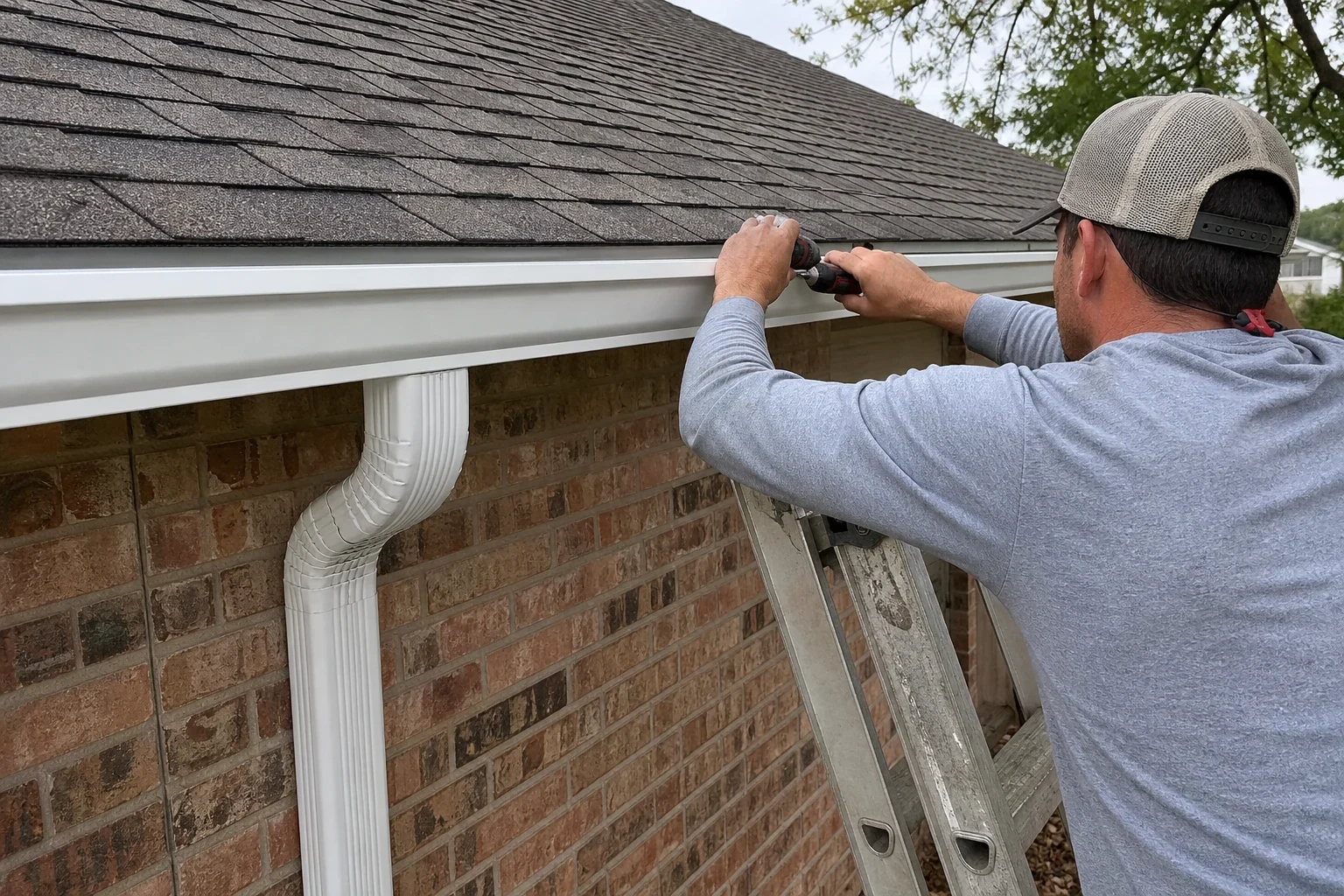
We install and repair gutters that carry water away from your home instead of spilling it against the siding and foundation. You get a clear explanation of what went wrong, the options that fix it, and a finish that sits clean and straight along the roofline.
What gutters should do, and when yours need work
The purpose of a gutter is simple. It collects the rain running off your roof and delivers it to a spot where it can do no harm. If it is too small, sloped the wrong way or pulling off the fascia, that water drops right where it causes trouble: along the base of the siding, across the front steps or into the soil beside the foundation.
Most failures come from a short list of causes. Hangers set too far apart, joints that open as the metal expands and shrinks with the seasons, downspouts too narrow for the roof they drain, and fascia that has gone soft behind the gutter. A heavy Oklahoma spring storm finds those weak spots fast, so gutters that seem fine on a dry day can overflow in the first real downpour.
We follow the water from the drip edge to the ground and tell you directly whether a repair will last or whether replacing the system is the better use of your money.
What our gutter work includes
- Continuous aluminum runs
- We roll each gutter on site from a coil, cut to the full length of the wall it serves. Joints end up only at the corners and outlets, which leaves far fewer spots for a leak to start.
- Sized to the roof above
- Before recommending 5-inch or 6-inch K-style gutters, we measure the roof area and pitch that drain into each run. Large or steep sections often call for the wider profile and 3x4 downspouts to keep pace in a hard storm.
- Hidden hangers, closely spaced
- We use screw-in hidden hangers rather than spikes and set them closer together than the minimum. That keeps the gutter tight to the fascia and stops the outer lip from drooping under the weight of water or leaves.
- Fascia and drip edge first
- We check the board the gutter will hang from before anything new goes up. Soft or rotted fascia is replaced, and we make sure the drip edge directs water into the trough, not down behind it.
- Downspouts and where water lands
- Downspouts go where the ground can take the flow. Extensions or splash blocks then carry the water several feet out from the foundation.
- Repairs and resealing
- Not every problem needs new gutters. Leaky miters, loose sections and low spots can often be resealed, re-pitched or re-hung when that is the sensible fix.
Signs your gutters need attention
Overflow with a clear trough
Rain pouring over the outer lip even though nothing is clogged usually points to a gutter that is too small or sloped away from the downspout.
Sagging or a gap at the fascia
When the gutter leans out from the board, the hangers have failed or the wood behind them has softened. Either one gets worse with each storm.
Drips at joints and corners
Steady dripping or rust-colored streaks at the miters mean the sealant there has broken down.
Blistered paint or stained boards
Peeling paint on the fascia or soffit often means water is slipping behind the gutter and soaking into the wood.
Washouts and puddles below
Displaced mulch, bare patches or standing water near the foundation show the downspouts are not moving water far enough from the house.
What moves the cost of a gutter job
Most of the number comes down to how many feet of gutter your home needs and the condition of the wood the old system is fastened to. Each item appears on its own line in our quote, and we go over it with you before anything is put on the calendar.
Length of the runs and number of corners
Overall footage carries the most weight. Each inside or outside miter takes extra labor and adds another joint we have to seal with care.
Gutter width and downspout size
Stepping up from a 5-inch gutter to a 6-inch profile with 3x4 downspouts raises the cost, and it also carries noticeably more water. We only recommend the wider setup when the roof planes draining into a run are large or steep enough to call for it.
Soundness of the fascia
A new gutter will not hold its line on rotted wood, so soft boards get replaced before anything is hung. That damage tends to stay out of sight until the old gutter comes down, which is why we probe the fascia when we visit to measure.
Eave height and access
Second-story walls, ground that slopes away under the roofline and thick shrubs or beds slow the crew and can mean extra ladders or staging to keep the work safe.
Guards and extensions, if you want them
Downspout extensions and gutter guards are choices, not part of every job. We tell you honestly whether the trees near your home make them worth paying for.
How a gutter job runs
- 1
Start with a call
Describe what you have noticed, whether that is overflow, drips or a sagging run. We ask a few questions about your home and pick a time to see it in person.
- 2
On-site measurements
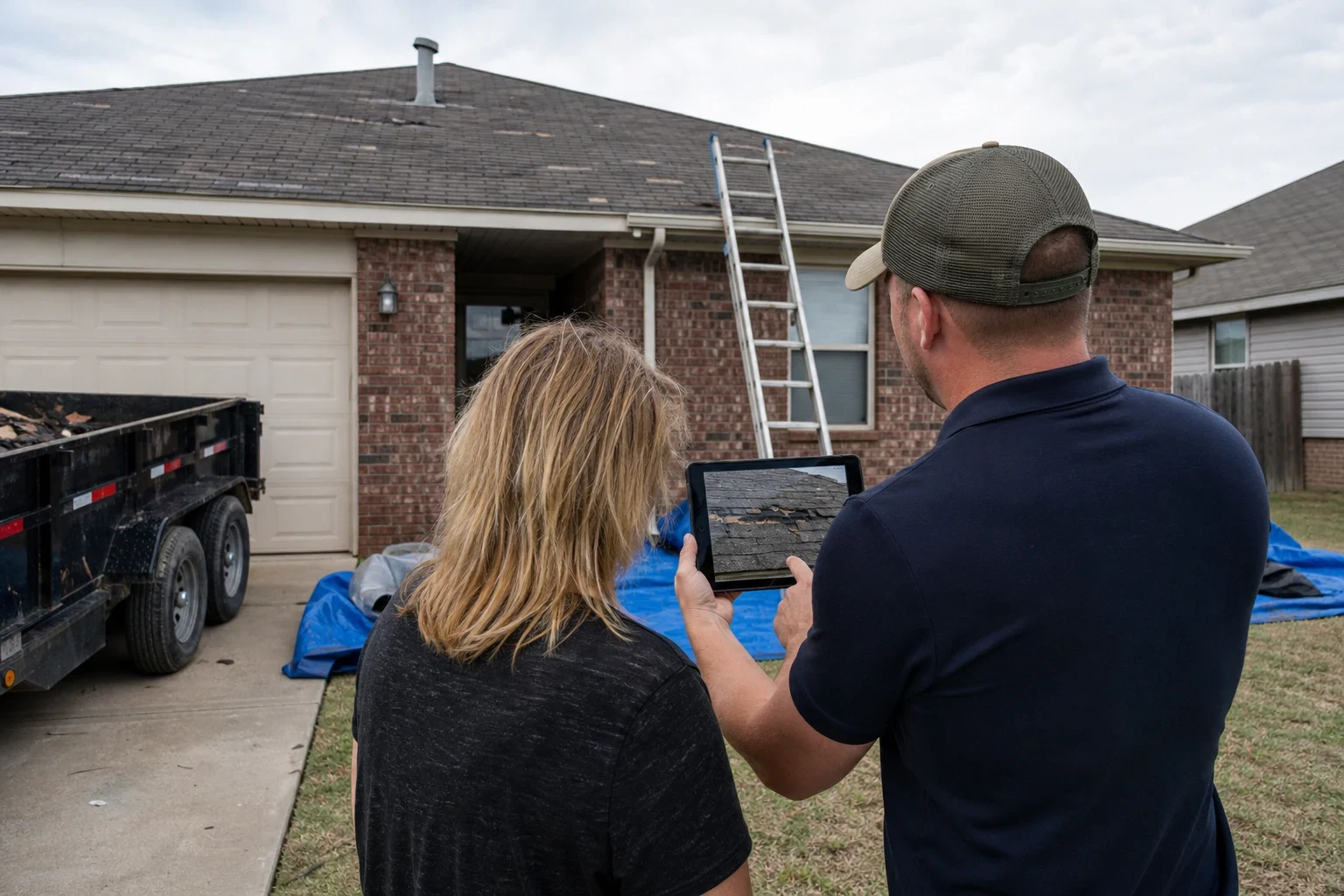
We measure each run, look over the fascia, drip edge and current slope, and photograph any problem areas. Those photos come to you so you can see the same things we did.
- 3
An itemized written quote
Gutter size, downspouts, fascia repairs and any optional items each get their own line. You decide which pieces make sense for your home.
- 4
The work itself
We take down the old gutters, replace any damaged fascia, then form and hang the new runs, usually in a single visit. Before we finish, we send water through every section and watch it drain.
- 5
Leaving it tidy
Old metal, screws and offcuts are gathered from the lawn and planting beds and hauled away. Your yard should look the way it did before we arrived.
Common questions about gutters
Will a repair do, or should I replace my gutters?
Small sags, loose sections and leaking corners can usually be fixed. Replacement makes more sense when the gutters are too small for the roof, when they are short sectional pieces joined every few feet, or when the fascia has rotted along long stretches. We share our photos and lay out both choices whenever both are reasonable.
Are one-piece gutters worth it over sectional ones?
For most houses they are. A gutter formed on site in one continuous length per run only has joints at the corners and outlets. Sectional gutters are pieced together roughly every ten feet, and every one of those joints depends on sealant that eventually gives out.
Do I need gutter guards?
That depends on the trees above your roof. Under heavy canopy, guards reduce clogs and the cleaning that comes with them. With little overhead cover, a cleaning or two a year usually handles it and guards add cost without much benefit.
Should I replace gutters when I replace my roof?
Often it is the right moment. With the old roofing off, the drip edge and fascia are fully exposed, so it is easy to correct how water reaches the gutter. If your current gutters are sound, we can take them down with care and rehang them after the new roof is on.
Can hail damage gutters?
Yes. Heavy hail can dent gutters and downspouts enough to change how they drain or create low spots that hold water. If the dents came from a recent storm, our storm damage repair page covers how we record that damage along with the roof.

Find out what your gutters actually need
Tell us what you are seeing at your home in Noble or nearby. We will set a time to measure, check the fascia and give you an itemized quote with straight answers on repair versus replacement.