ServicesCommercial Roof Replacement
Commercial Roof Replacement in Noble, OK
Once a low-slope roof can no longer be held together with repairs, we install a new system chosen for your building, its drainage and your budget. We explain what caused the failure, which option we recommend and what each one costs to put on and keep up.
When Replacement Is the Right Call
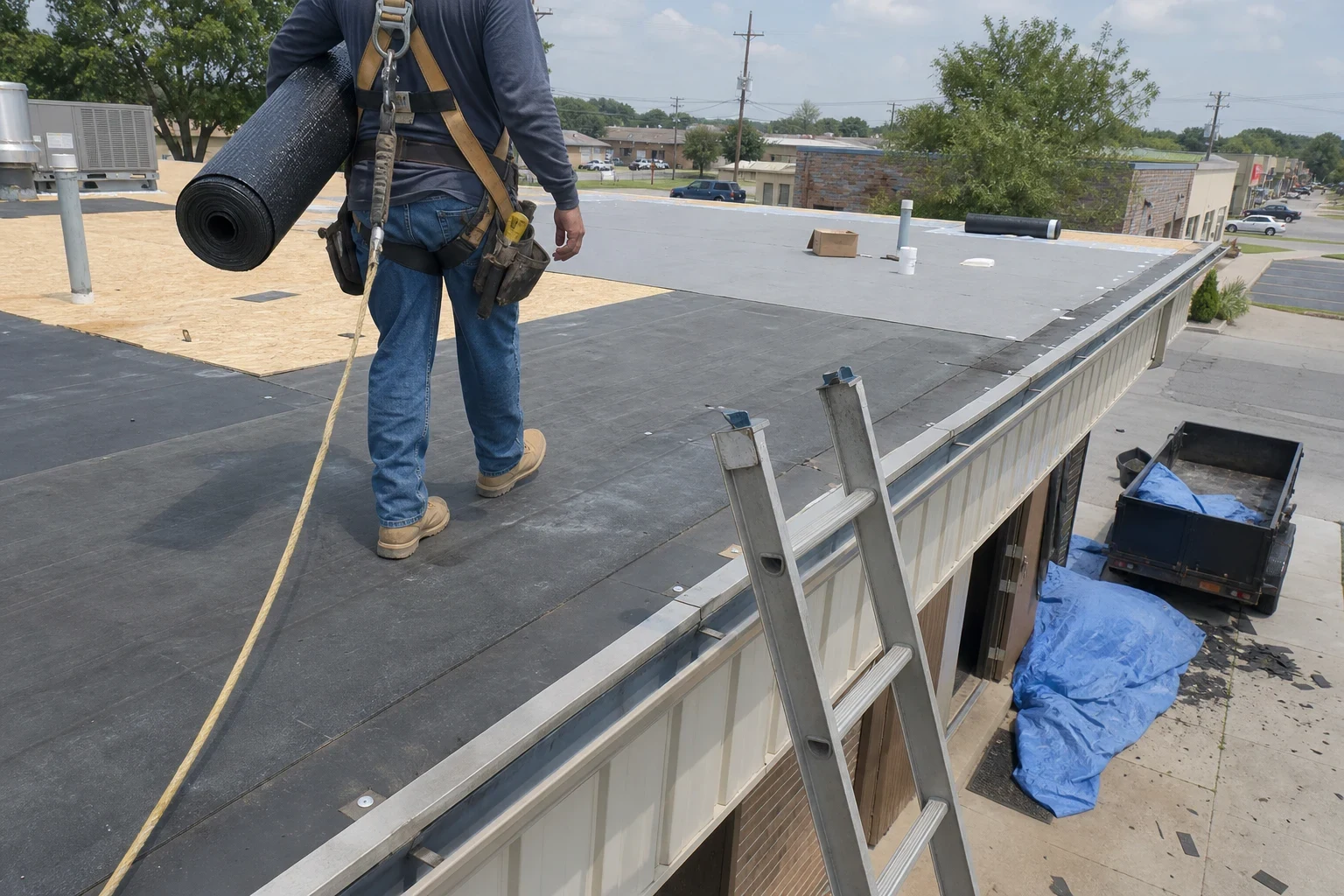
Most commercial roofs do not fail all at once. Seams open, the membrane shrinks away from parapet walls, water finds its way into the insulation and the leaks start moving around the building. Once the insulation underneath is saturated, patches on the surface stop holding, and you are paying for repairs that buy weeks instead of years.
We start by finding out how much of the roof is actually wet and why. If most of it is sound, Commercial Roof Repair may be the better answer, and we will say so. If the damage is widespread, or the roof already has two layers on it, replacement is usually the only route that makes sense.
What the Work Includes
- Core samples and moisture check
- Small cores taken from the roof show us each layer, the insulation and the condition of the deck. From those we know whether a recover is permitted or the old roof has to come off completely.
- System selection
- We install TPO, EPDM, modified bitumen and standing seam metal. Heat, hail and foot traffic affect each one differently, and we walk you through those differences before you decide.
- Insulation and tapered drainage
- New insulation goes in to meet current energy code, and tapered panels are added where water has been collecting. Ponding wears a membrane out early, so sloping water toward drains and scuppers belongs in any proper job.
- Flashing and penetrations
- Most leaks start at parapet walls, unit curbs, pipe penetrations and edge metal. Each of those gets its own careful flashing detail instead of a bead of sealant over the gap.
- Permit and cleanup
- We handle the permit, book the inspection and remove all tear-off debris from the site. At the end of every workday we run magnetic sweeps around entrances and parking areas.
Signs Your Building Needs a New Roof
Leaks that keep moving
Water travels under a membrane and through wet insulation before it drips. When repairs in one spot just shift the leak elsewhere, the problem is underneath.
Ponding that never drains
Standing water 48 hours after rain points to sagging insulation, clogged drains or a deck that has settled.
Blistering, cracking or shrinkage
Aging modified bitumen blisters and cracks. Older single-ply membranes shrink and pull at the edges, tenting the flashing away from walls.
Stained or sagging ceiling tiles
Repeated stains across several rooms usually mean the insulation has been taking on water for some time.
Hail bruising across the field
After hail, fractures in the membrane may be hard to see from the ground. Spread across the whole roof, they often justify replacement rather than spot repair.
How a Replacement Runs
- 1
Assessment on the roof
We walk the full roof, pull core samples and photograph the conditions. Those same photos are shared with you.
- 2
Written scope with your options
The scope is itemized: removal or recover, the membrane system, insulation, flashing details and edge metal are each spelled out. When two approaches both make sense, we present them side by side.
- 3
Scheduling around your operation
Staging, crane or lift access, dumpster location and work hours are planned around your tenants, customers and deliveries. Loud tear-off work can shift to early mornings or slower days.
- 4
Installation in sections
We open up only as much roof as we can dry in before the day ends. Every section is sealed watertight before the crew goes home, so a late storm stays outside.
- 5
Final walk and inspection
We check each seam and detail, pass the city inspection and walk the completed roof with you.
What Moves the Cost
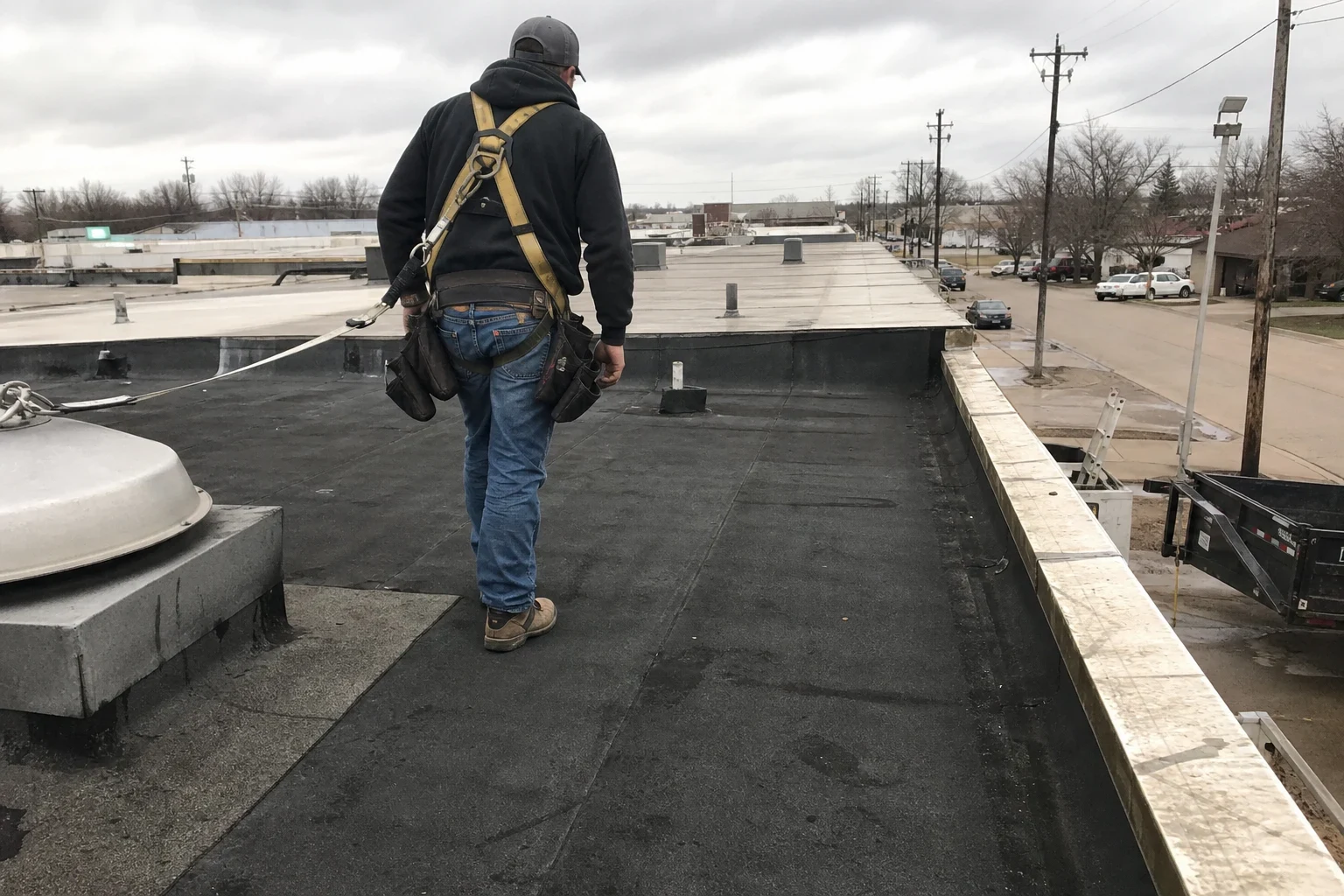
Commercial roof pricing depends far more on what is under the membrane and how the roof is built than on its footprint alone. We price from the core samples and measurements, not a rough guess, so the scope you approve is the scope we build.
- Tear-off versus recover
- A recover over one dry existing layer costs less. A second layer already on the roof, or wet insulation, means full removal and more labor and disposal.
- Membrane and insulation choice
- Thicker membranes, metal panels and higher insulation values cost more up front and usually last longer. Tapered insulation for drainage adds material too.
- Penetrations and rooftop equipment
- Every curb, vent, drain and skylight needs its own flashing. A roof crowded with HVAC units takes far longer than an open field of membrane.
- Access and deck condition
- Building height, crane needs and limited staging space add time. Rotted wood or rusted steel decking found during tear-off is replaced at a rate stated in the scope beforehand.
Commercial Roof Replacement Questions
Something not covered here? (405) 689-8277
Can a new roof go over the existing one?
In some cases. Code permits a recover only when the roof has one existing layer and the insulation beneath it is dry. The core samples we take settle that before you agree to any scope.
Will my business be able to stay open?
Usually, yes. We replace the roof one section at a time, keep doorways and walkways clear and plan the loudest work around your hours. You will see the daily schedule before work begins.
How do I know which roof system fits my building?
The answer comes from slope, foot traffic, rooftop equipment and how long you expect to hold the property. TPO is often chosen for its reflective surface, modified bitumen stands up well to regular foot traffic and metal works on low-slope roofs that have enough pitch. We tell you the reasoning behind our recommendation.
How many days does a commercial replacement take?
A smaller building may be done in a few days. Bigger roofs, or roofs crowded with units and penetrations, take longer, and rain can add time. Your written scope includes a schedule built on those realities.
Does insurance cover a commercial roof damaged by hail?
Your carrier and your policy decide that. We record the damage in photos and measurements, and we are glad to be on the roof when the adjuster inspects it, though the decision on coverage belongs to the insurer. Our Storm Damage Repair page walks through that process further.
Find Out Where Your Building's Roof Stands
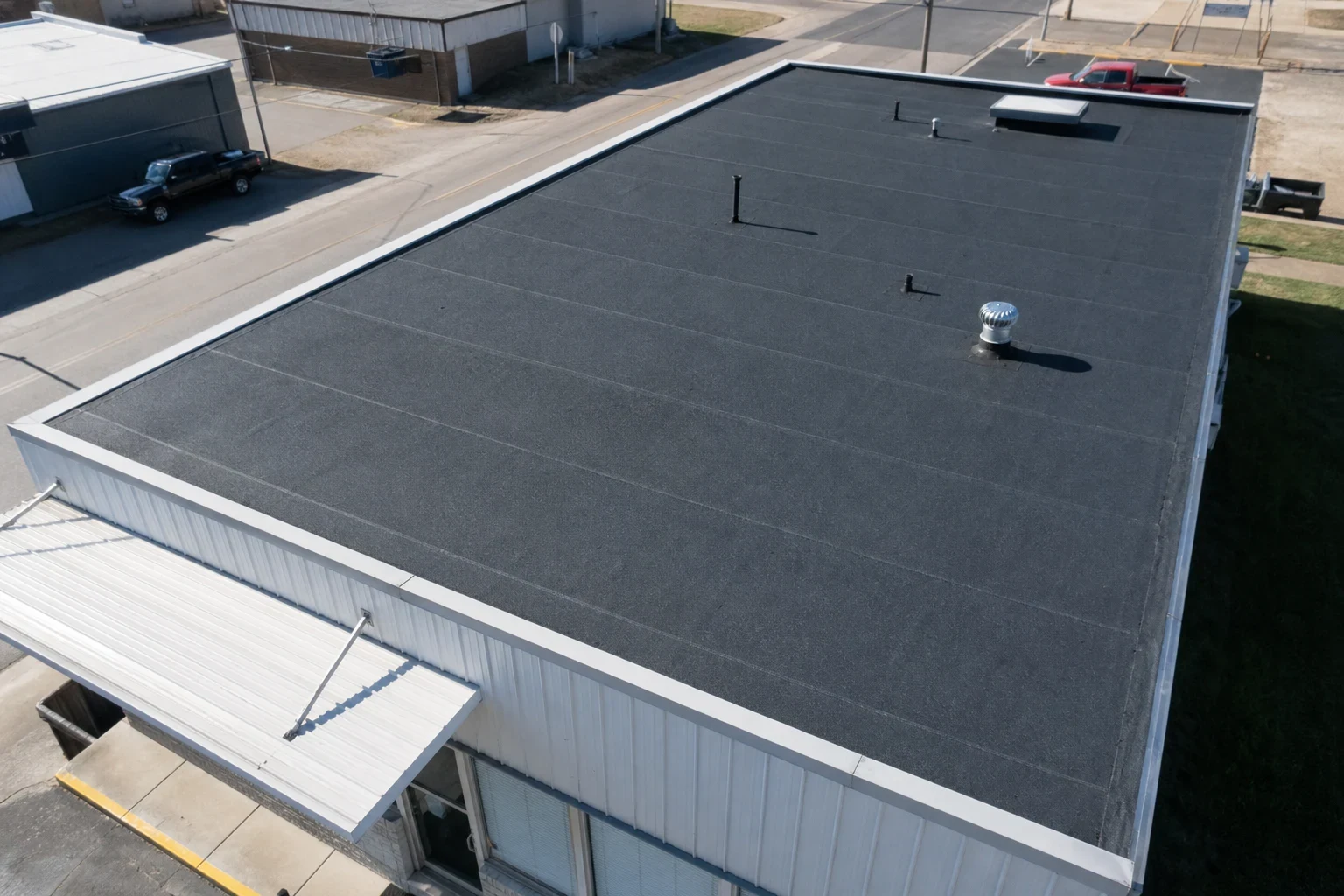
Describe the building, where water is showing up and which repairs have already been tried. We will arrange a visit to the roof and give you a plain answer on repair versus replacement.