ServicesRoof Inspections
Roof Inspections in Noble, OK
We climb up, look over every slope and, when there is a way in, the attic too, taking photos as we go. Then you hear plainly what is wrong, what likely caused it, and whether it calls for a repair, a replacement or simply another look next year.
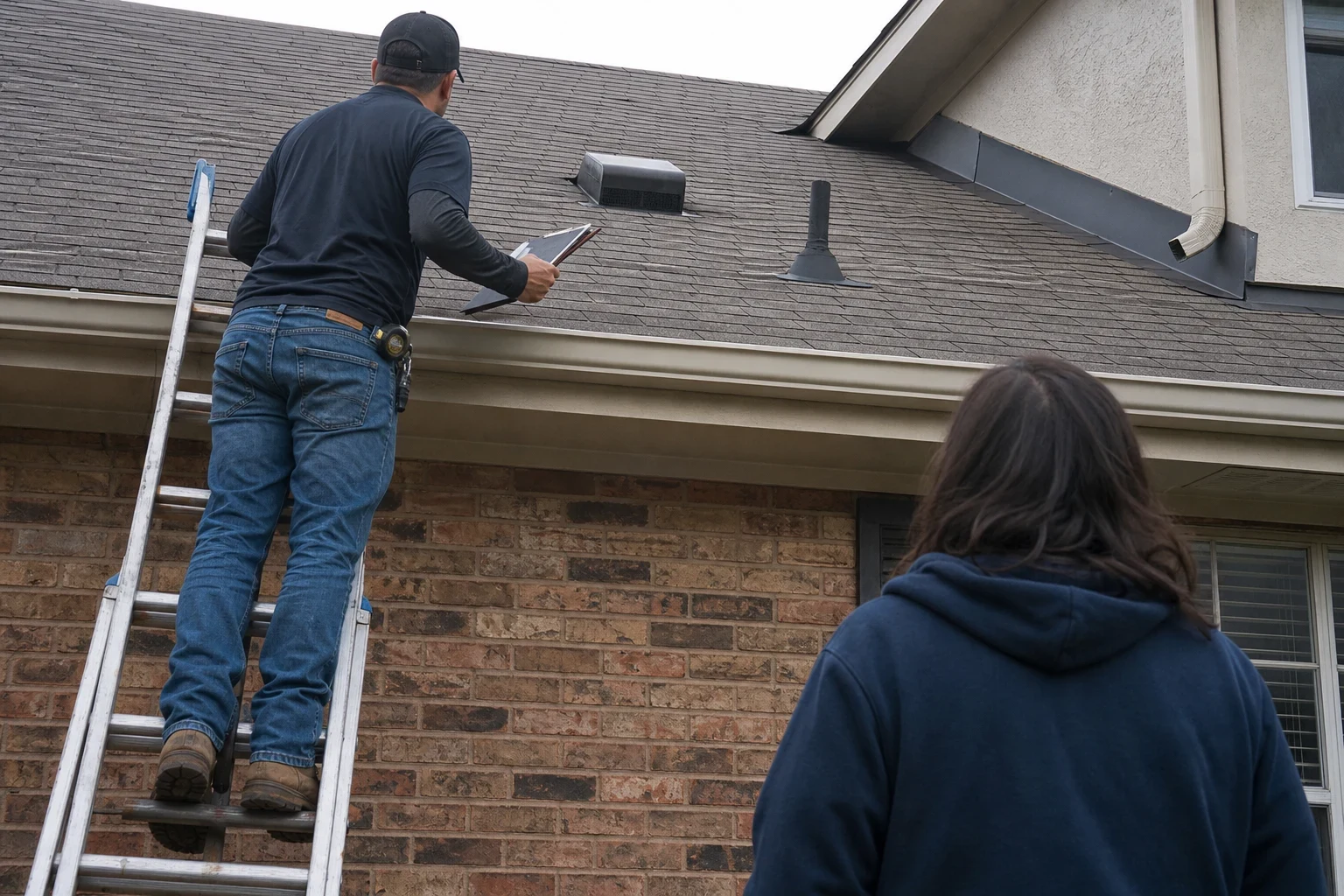
What a Roof Inspection Tells You
Roof trouble usually begins out of sight. A shingle tab that has lifted, a split rubber collar around a pipe or a gap in the flashing along a wall can let moisture creep in for a long time before any mark shows up indoors. An inspection catches those weak points early and names the cause behind each one.
It makes sense ahead of buying or selling a house, after a serious hail or wind storm, once a roof is past fifteen years, or whenever something from the driveway just does not look right. It is also the fair place to start before anyone brings up a full replacement.
You come away with photos, a brief written summary and a clear verdict. Now and then that verdict is that your roof is in good shape and needs nothing.
What We Check on Every Inspection
- Shingle surface and granules
- We look for hail bruises, cracks, curled edges, torn-off tabs and patches worn down to the black asphalt. Once that mineral coating thins, the sun bakes the shingle directly and the whole slope ages faster.
- Flashing and penetrations
- Leaks most often start where something passes through or meets the roof: chimneys, sidewalls, skylights, vents and plumbing pipes. We confirm the metal is sealed, nailed and overlapped in the correct direction, and that the rubber collars around pipes are still intact.
- Decking and roof plane
- A spongy feel underfoot, a dip in the roofline or nails backing out can all mean the plywood below is wet or coming apart. We mark any spot that feels or looks off.
- Attic and ventilation
- Inside the attic we watch for pinholes of light, drip trails, darkened sheathing and signs of heat or humidity building up. A poorly vented attic wears shingles out early, even on a roof that looks healthy from the street.
- Gutters and drainage
- We make sure gutters slope toward the outlets, hold tight to the fascia and are free of debris, and that downspouts send water well away. Water spilling over the edge can rot the trim boards the roof edge rests on.
Signs Your Roof Is Due for a Look
A recent hail or wind event
You usually cannot see hail damage from the yard. A spring storm in central Oklahoma can dent shingles without tearing any off, and those dents tend to give way a season or two later.
Stains on ceilings or attic wood
A tan ring on drywall or a dark streak on rafters shows water has been finding its way in, often for a while. The leak itself may sit several feet away from the mark.
Granules in the gutters
Some loose grit is expected right after new shingles go on. Heavy buildup from an older roof tells you the protective layer is wearing away.
Shingles that curl, crack or slide
When edges lift into a cup shape or tabs drift out of their rows, the seal strip has let go and wind can pry underneath.
A sale, purchase or refinance
Having the roof's condition documented lets buyers, sellers and lenders settle on a fair value and keeps last-minute surprises out of the closing.
What Affects the Cost of an Inspection
An inspection is a modest cost next to the repairs it can prevent, and we give you the price on the phone before we come out. A few things change how long the visit takes and what it involves.
Roof size and layout
A simple gable roof goes quickly. Multiple valleys, dormers and roof levels take more time to walk and document.
Pitch and access
Steep slopes may need extra safety gear, and a tight or missing attic hatch can limit what we can see from inside.
Purpose of the report
A quick check after a storm is shorter than a detailed condition report for a sale or an insurance claim, which needs more photos and notes.
Roofing material
Asphalt shingles are the most direct to inspect. Metal, tile or older layered roofs need different handling and sometimes more time.
How the Inspection Day Runs
- 1
A short conversation first
When you call, we ask how old the roof is, whether you have seen any leaks and what made you reach out. Those answers point us to the areas that deserve the closest look.
- 2
Ground and roof walk
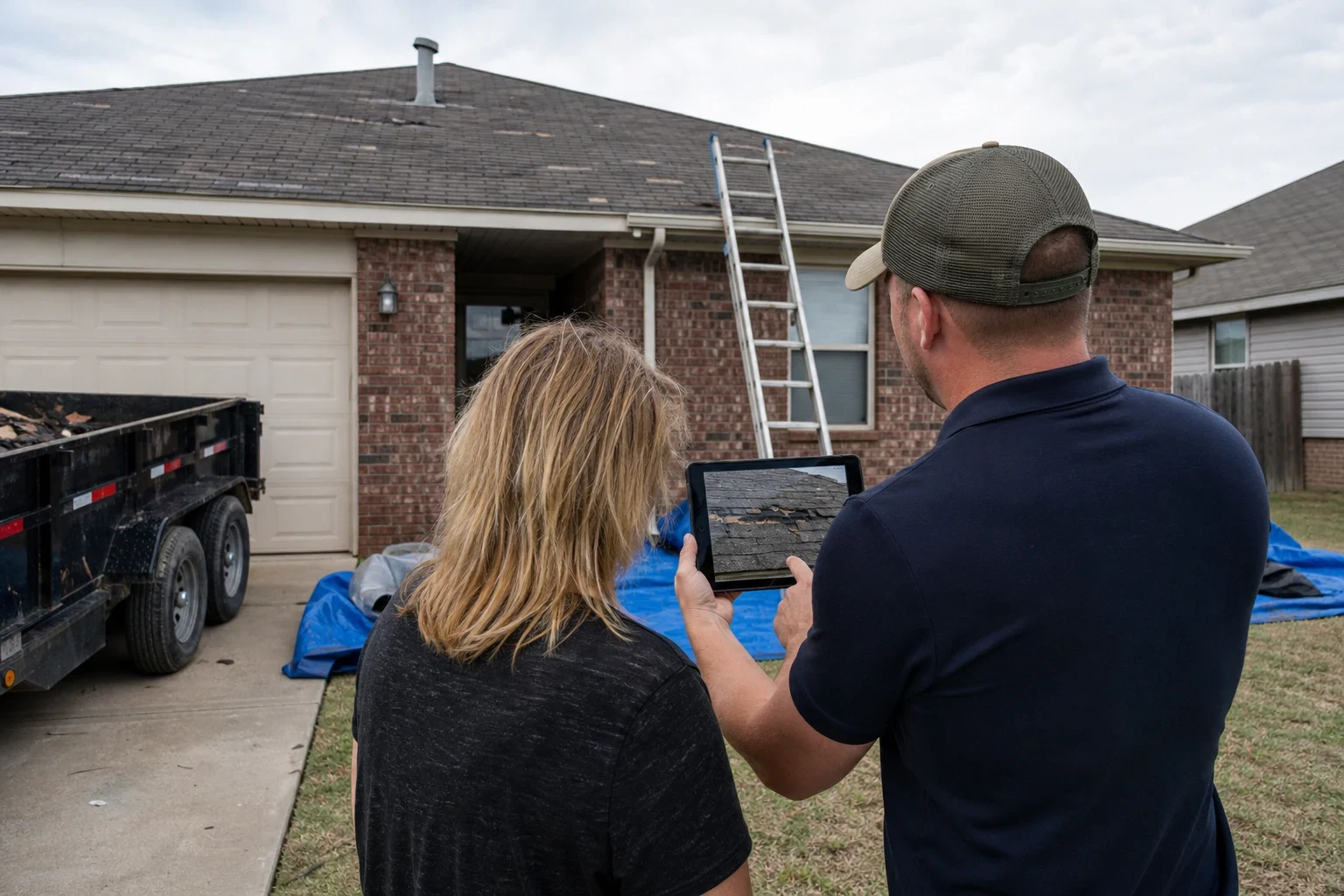
We begin at the roof edge and gutters, then climb up when the slope and weather make it safe. We place our feet with care, avoid brittle sections and photograph each problem right where we find it.
- 3
Attic check
When the attic is reachable, we go up and study the bottom side of the roof boards and how air moves through the space. What we find there often backs up or rules out what we spotted outside.
- 4
Findings in plain language
We sit down together, go through the photos and explain each item: what it is, the probable cause and how soon it needs attention. If repair or replacement is warranted, you receive a written line-item estimate, and if the roof needs nothing, we tell you that.
Roof Inspection Questions
How long does a roof inspection take?
For most houses, plan on roughly an hour at the property, attic included. Bigger or steeper roofs add time. Before we pack up, we go through what we saw with you.
Will you try to sell me a new roof?
No. Our job on an inspection is to report what is there and what it means. Plenty of visits end with a minor repair or nothing at all, and we would much rather tell you that than have you replace a roof with years left in it.
Will the inspection be useful if I file an insurance claim?
Yes. The photos and notes we take become a dated record of storm damage you can hand to your insurance company. Coverage is decided by the adjuster, not us, but we can walk you through what we recorded and join the adjuster on the roof if you would like.
How often should my roof be inspected?
Every year or two works well for most homes, along with a check after any heavy hail or strong wind. Once a roof is getting older, a yearly visit makes sense so minor wear is handled before it grows.
Do I need to be home?
It is easier if you are, mostly so we can get into the attic and talk through the results face to face. If your schedule does not allow it, we can do the exterior on our own and pass along the photos and summary once we finish.
Find Out What Your Roof Really Needs
Give us a ring, describe the roof and anything that has caught your eye, and we will pick a day to visit. Afterward you get photos and a direct answer, even if that answer is to leave it alone.